


Running a dealership means managing more moving parts than most businesses ever face. You are selling physical inventory that depreciates, financing deals that involve third parties, tracking service history on vehicles that come back for years, and trying to market to buyers who may only purchase once every several years. Generic business software was not designed for any of that. Auto dealers software exists because the dealership workflow is genuinely different, and getting the platform choice wrong costs you in ways that compound quietly over time.
This guide walks you through what to actually evaluate, where buyers tend to go wrong, and how to match a platform to how your dealership operates rather than how a vendor thinks it should operate.
The Core Problem with Most Dealership Tech Evaluations
Most dealerships start their software search by listing features. That instinct is understandable, but it leads you toward platforms that look comprehensive on a demo and feel painful six months into implementation. The better starting point is process: map out how a deal actually moves through your operation, from the moment a lead arrives to the moment the car leaves the lot and enters your service pipeline. Every gap in that map is a place where software either helps or creates friction.
Feature lists also tend to obscure the real question, which is integration. A dealership management system (DMS, the central platform that handles inventory, finance, and customer records) that does not talk cleanly to your marketing tools, your website, and your service department creates manual work that erodes the efficiency you bought the software to gain.
What the Category Actually Covers
Auto dealers software is not a single product type. The category spans several distinct tool families.
Dealer management systems are the operational backbone. They handle vehicle inventory, deal structuring, financing, desking (the process of building out deal terms with a customer), and often connect to manufacturers and lenders. These are typically the most complex and expensive platforms in the category, and they require the most rigorous evaluation.
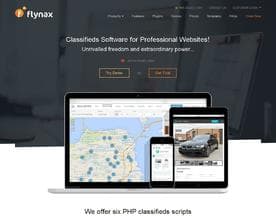
Inventory and listing platforms focus on getting your stock in front of buyers. Flynax and AutoXloo are examples in this space, offering tools to manage vehicle listings across your website and third-party marketplaces. The key variables here are syndication breadth (which marketplaces your listings reach automatically), data accuracy, and how well the platform handles photo and vehicle description management at scale.
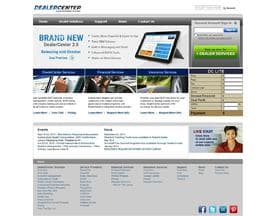
CRM and lead management tools track prospects from first inquiry through purchase. DealerCenter covers this alongside DMS functionality, which illustrates an important point: the lines between these categories are blurring. Many platforms now bundle DMS, CRM, and inventory management into a single interface, which simplifies your vendor relationship but raises the stakes on choosing the right one.
Digital marketing and advertising tools help you drive traffic and convert it. AutoSweet sits in this part of the category, focusing on digital advertising management specific to dealerships. The value here is not just automation but attribution: knowing which channels are actually producing buyers, not just clicks.
Finance and credit tools streamline the desking and financing process. Auto Credit Express operates in the credit and financing side of the category, connecting buyers who may have credit challenges with appropriate lenders. For dealerships with a significant share of subprime or non-prime buyers, this integration can be material to deal volume.
Where Buyers Get the Evaluation Wrong
Treating the demo as the test
A well-run demo will show you the platform's strengths and route around its weaknesses. Your real test is whether the software handles your edge cases: split deals, fleet sales, trade-in chains, service-to-sales handoffs. Build a list of the five or ten scenarios your team handles every month that fall outside the standard workflow, and ask the vendor to walk through each one. If they cannot, or if the answer is always a workaround, pay attention to that.
Underestimating data migration
Your existing inventory data, customer records, and deal history are not just records, they are relationships. Migration from one platform to another is where many dealership software transitions go sideways. Ask specifically: who owns the migration, what format your data needs to be in, and what happens to historical data that does not map cleanly to the new system's structure.
Ignoring the OEM and lender integrations
If you are a franchised dealer, your manufacturer will have preferred or required integrations. Some DMS platforms have deep OEM connections built in; others require middleware. Understand what your franchise agreement implies for software, and verify that any platform you consider has current, maintained integrations with your lenders and manufacturers, not just legacy connections that create reconciliation headaches.
Letting price anchor the decision
Software in this category ranges widely in pricing structure. Some platforms charge per-rooftop, some per-user, some as a revenue share. The right question is not which is cheapest but which cost structure aligns with how your dealership scales. A per-user model can become expensive as your team grows; a flat rooftop fee may look expensive upfront but predictable over time.
Matching Platform to Dealership Type
Not every platform suits every operation. A high-volume independent used car dealer has different needs from a multi-franchise group or a specialty dealer focused on powersports or RVs. ARI Network Services specifically addresses the powersports and outdoor equipment dealer market, which is a reminder that the category has genuine specialists. If your inventory is unusual, look for platforms that have designed for your segment rather than adapted a general automotive solution.
Scale matters too. A single-point dealer with a small team needs a system that is fast to learn and low in administrative overhead. A dealer group with multiple rooftops needs centralized reporting, permission structures that separate locations, and consolidation across inventory. These are different platforms, sometimes from different vendors entirely.







The Evaluation Framework Worth Following
Before you talk to a single vendor, get clear on four things. First, what your current software does well, because you do not want to trade a known strength for an unknown weakness. Second, what your team actually spends time on manually that software should be handling. Third, which integrations are non-negotiable on day one versus nice to have eventually. Fourth, what your tolerance for transition disruption is, because some implementations are genuinely disruptive and you should schedule them accordingly.
With that clarity, you can evaluate platforms on fit rather than features, and you will ask better questions in every conversation you have with a vendor.
Auto dealer software done right becomes invisible. Deals flow, inventory updates automatically, customers get timely follow-up, and your managers see the numbers they need without pulling reports manually. Done wrong, it becomes another thing your team works around. The difference is almost always in the evaluation, not the technology.


