


Most teams buying barcoding software spend the majority of their evaluation time on scanners and label printers. That is understandable. The hardware is tangible, it is easy to demo, and it feels like the core of the decision. But the software layer is where operations either hold together or quietly unravel, and it deserves far more scrutiny than it typically gets.
If you are here because your current system is slowing you down, or because you are setting up a new operation and do not want to make an expensive mistake, this guide will help you ask sharper questions before you commit.
What Barcoding Software Actually Covers
The term "barcoding software" stretches across several distinct use cases, and conflating them is one of the most common early mistakes buyers make.
At one end, you have label design and printing tools. These let you create compliant, professional labels, connect to your data sources, and print at scale. At the other end, you have barcode scanning and decoding SDKs (software development kits, meaning code libraries developers embed into applications), which power the scanning functionality inside mobile apps, warehouse systems, or point-of-sale platforms. Between those two poles sit inventory tracking solutions, compliance and standards management tools, and enterprise label management platforms that connect directly to ERP and WMS systems (enterprise resource planning and warehouse management systems respectively).
Understanding which of these you actually need, and whether you need more than one, is the first honest question to answer before you look at any vendor.
The Compliance Problem Most Buyers Underestimate
If your products move through retail supply chains, healthcare channels, or cross-border logistics, barcode compliance is not optional and it is not simple. Standards bodies govern exactly how barcodes must be structured, what data they must carry, and how labels must be formatted for different industries and trading partners.
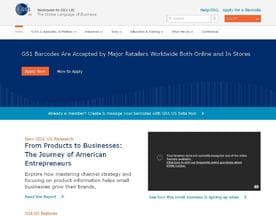
GS1 US manages the GS1 standards that govern barcodes across retail, healthcare, and food service in the United States. Getting this wrong means rejected shipments, chargebacks from retailers, or failed audits. Some buyers discover this only after their first compliance failure, which is an expensive lesson.
The smarter move is to confirm, before you finalize any shortlist, that the software you are evaluating supports the specific standards your trading partners and regulators require. Ask vendors for explicit confirmation, not general assurances.
Label Design Depth Matters More Than You Think
A label design tool that looks adequate in a demo can become a bottleneck the moment your requirements get specific. Variable data printing (labels where some fields change with every print run, pulling from a live database), conditional formatting rules, and support for industry-specific symbologies (the different barcode formats like QR, Code 128, Data Matrix, and so on) are features that separate capable tools from limited ones.
Loftware sits at the enterprise end of this spectrum, with deep integration into ERP and supply chain systems, which suits operations where label data flows from complex backend sources. CYBRA covers similar ground with a focus on compliance-driven label management for regulated industries. If your operation is smaller or more straightforward, platforms aimed at that scale will serve you better without the implementation overhead.
The point is not which vendor to choose. The point is that label design complexity scales with your data and your compliance requirements, and you should pressure-test any tool against your most demanding real-world scenario before you buy.
SDK vs. Off-the-Shelf Scanning
If your team is building or customising a mobile application, a warehouse scanning workflow, or any software that needs to read barcodes programmatically, you are looking at a developer-facing product rather than a packaged application.
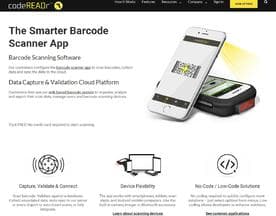
Dynamsoft is a well-known name in this space, offering SDKs for barcode reading across web, mobile, and desktop environments. The evaluation criteria here shift significantly compared to label software. You are assessing decode accuracy across different barcode types and image qualities, SDK performance on the devices your team actually uses, licensing terms (per-deployment, per-device, or per-call pricing models each have different cost trajectories at scale), and the quality of documentation for your developers.
If your team does not have development capacity, an SDK is the wrong product category entirely. Off-the-shelf scanning tools that do not require custom integration will serve you better.
Integration Is Where Deals Go Wrong
The single most consistent pain point we hear from buyers who regret a barcoding software purchase is integration. The software worked fine in isolation but connecting it to their inventory system, their ERP, or their e-commerce platform was far harder than the vendor implied.
Before signing anything, map every system the barcoding software needs to talk to. Ask vendors for specific integration documentation for each of those systems, not a general list of supported platforms. Find out whether integrations are native, API-based, or reliant on third-party middleware. Each option carries different maintenance risk.
Wasp Barcode Technologies has built its product suite around smaller operations that need inventory and asset tracking without enterprise-level integration complexity, which is a legitimate design philosophy for that segment. For more complex environments, integration depth becomes the deciding factor, not features.
Deployment Model and Total Cost
Cloud-hosted software is the default expectation today, but some industries and some operations have legitimate reasons to prefer on-premise deployment. Regulated environments, facilities with limited connectivity, or organisations with strict data residency requirements may need on-premise options.
Understand what you are actually paying for across three years, not just the first year. Subscription pricing can look modest until you factor in user count growth, overage charges, support tiers, and the cost of any professional services required for setup. Perpetual license models look more expensive upfront but sometimes cost less over a longer horizon. Neither is inherently better. Run the numbers for your specific situation.




What to Do Before You Build a Shortlist
There is a practical sequence that saves time and avoids expensive mismatches.
First, document your use cases in plain language: what you are labeling, where those labels go, who scans them, and what system needs to receive the data. Second, identify your compliance obligations, since these will immediately eliminate some vendors and platforms. Third, list every system the barcoding software needs to connect to and confirm integration feasibility before, not after, you get attached to a particular product.
Only then should you approach vendors and request demos. By that point, you will be asking specific questions rather than watching polished presentations and nodding along. That shift changes the quality of information you get, which changes the quality of the decision you make.
The category is less glamorous than CRM or analytics. But when barcoding works well, it disappears into the background of your operations. When it does not, everything from receiving to fulfilment slows down and the errors compound. Getting the evaluation right is worth the extra time upfront.


