


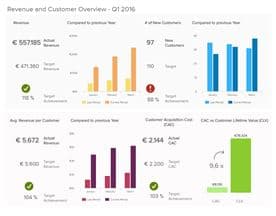
Somewhere in your company right now, there is a dashboard. It has seventeen tiles. It was built nine months ago for a quarterly business review. Someone pinned it to a Slack channel. Three people looked at it the week it launched. Nobody has opened it since.
Elsewhere in the same company, the finance team is pulling numbers into a spreadsheet because they do not trust the figure on that dashboard. The sales team has their own dashboard with a different revenue number. The product team has a third. In the Monday leadership meeting, everyone stares at their laptops and quietly wonders which version is correct.
This is the state of business intelligence at most mid-market and enterprise firms. Companies have never spent more on BI, analytics, and big data platforms. Gartner and IDC put global spend on this stack well above $30 billion a year, and climbing. Yet the confidence gap has never been wider. Executives look at dashboards and do not trust the numbers. Analysts build dashboards that nobody opens. The data team spends its days explaining why three reports disagree.
The tools to fix all of this exist. They are mature, well-reviewed, and deployed at scale across thousands of organizations. The gap is not technological. It is how most firms think about the problem.
The Dashboard Problem Is Real
The core issue is not that BI tools are bad. It is that most organizations bought them expecting self-serve visualization to solve a trust problem. It does not. A platform that makes it easier to build a chart does not make the underlying number any more reliable. It just makes it faster to create a new version of the disagreement.
A static dashboard also gives leadership a false sense of control. The board sees a tidy grid of revenue, pipeline, and retention tiles and assumes the business is being measured. In reality, the definitions behind those tiles have drifted, the data is stale, and nobody is responsible for keeping the logic consistent across tools.
This is exactly the gap that modern business intelligence software is designed to close. These platforms replace ad hoc dashboards with a governed system that connects data modeling, reporting, and distribution in a single workflow. The best of them now include AI-driven natural language queries, embedded analytics for customer-facing products, and integration with the semantic layers that define what "revenue" or "active customer" actually means.
What Modern BI Software Actually Does
Modern BI platforms go well beyond drag-and-drop charting. They provide governed data models, centralized metric definitions, scheduled and event-driven reporting, role-based access, embedded analytics for product and portal use cases, and increasingly, AI assistants that let non-technical users ask questions in plain English.
Here are the vendors most mid-market and enterprise buyers are evaluating today.
Microsoft Power BI
Microsoft Power BI is the default choice for most Microsoft-first enterprises, and it has quietly become one of the most capable platforms in the market. It integrates natively with Microsoft Fabric for the full data stack, with Copilot for natural-language querying, and with Excel, Teams, and SharePoint for distribution. Pricing is accessible for the category. Power BI Pro runs around $14 per user per month, Power BI Premium Per User sits at roughly $24 per user per month, and capacity-based Premium licensing scales into enterprise tiers. For organizations already inside the Microsoft ecosystem, the total cost of ownership argument is difficult to beat, which is why Power BI now sits at the top of most Gartner and Forrester evaluations by deployment share.
Tableau
Tableau, part of Salesforce since 2019, remains the benchmark for visual analysis depth and analyst productivity. Its pricing sits higher than Power BI. Tableau Creator licenses run around $75 per user per month, Explorer licenses around $42, and Viewer licenses around $15, with enterprise and embedded tiers priced on request. Tableau Pulse and the Einstein integration have pushed the product toward AI-assisted insights and conversational analytics. It remains the strongest option for organizations that value visualization craftsmanship, governed self-service, and deep integration with Salesforce data.
Qlik
Qlik takes a different architectural bet. Its associative engine lets users explore relationships across data without pre-modeling every join, which makes it particularly suited to exploratory analysis in complex environments. The acquisition of Talend has strengthened its data integration and governance story, and Qlik Cloud Analytics brings the modern pricing model the market expects. For companies that care about data lineage, complex master data, and the ability to ask genuinely exploratory questions, Qlik is often shortlisted alongside Power BI and Tableau.
ThoughtSpot
ThoughtSpot bet early that the future of BI was search and natural language rather than dashboards, and that bet is aging well. Its Spotter AI agent lets business users ask questions in plain English and receive answers drawn from governed data models, with drill-downs and follow-up questions built into the flow. ThoughtSpot pricing starts at around $95 per month for its Team tier, with Pro and Enterprise tiers moving to annual contracts. For organizations tired of building dashboards nobody opens, ThoughtSpot offers a genuinely different buying proposition: fewer dashboards, more answers.
You can explore the full range of vendors in the business intelligence software category on Serchen.
Analytics: Where the Real Work Happens
BI platforms surface numbers. Analytics platforms produce them. The distinction matters because most of the serious work in a data-driven company happens upstream of the dashboard, in the modeling layer, the exploration notebooks, and the governed metric definitions that every downstream report relies on.
This is where analytics software earns its keep. These platforms sit closer to the analyst and data engineer workflow, and they are often where organizations get the most leverage on data spend.
Looker
Looker, now part of Google Cloud, took the boldest architectural bet in the modern BI era. Rather than letting every user build their own logic, Looker centralized business definitions in a modeling layer called LookML and forced consistency across every report. The upside is that "revenue" means the same thing everywhere the data flows. The downside is that change management requires engineering involvement. Looker pricing is custom and typically starts in the tens of thousands of dollars annually for mid-sized deployments, scaling significantly for enterprise. For organizations that need a single source of truth for metrics, Looker remains one of the most disciplined options on the market.
Sigma Computing
Sigma Computing takes a very different posture, blending the familiarity of a spreadsheet with the governance of a cloud data warehouse. Analysts and business users work directly against warehouse data using a spreadsheet-like interface, while IT retains control over permissions and modeling. For companies whose analysts still live in Excel but whose data has outgrown it, Sigma is often the most frictionless migration path into the modern data stack.
Mode
Mode is built for analysts who need to move between SQL, Python, and visualization without switching tools. Its collaborative notebooks and governed reports have made it popular with data teams at high-growth companies where most serious analysis still happens in ad hoc queries rather than dashboards. Mode pricing includes a free Studio tier for small teams and paid Business and Enterprise tiers for larger deployments.
Domo
Domo takes a broader platform approach, combining data integration, BI, and AI agents in a single cloud platform. Its appeal is to executives who want a "single pane of glass" experience without stitching together multiple vendors. Domo pricing is typically custom and quoted annually, with most mid-market deployments landing in the $25,000 to $100,000 range depending on user count and data volume. For organizations that want a bundled path from raw data to executive dashboard, Domo is worth the evaluation.
Browse the full category on Serchen's analytics software page.
Big Data: The Foundation Most Buyers Skip
BI and analytics tools are only as good as the data infrastructure underneath them. This is the part of the stack that most business buyers never see, and it is also the part that most often determines whether the dashboards at the top of the stack will ever be trustworthy.
Big data software covers the platforms that store, process, and prepare data at scale for analytics and AI workloads. For any company past the early stage, the big data layer is no longer optional. It is the reason the BI tool at the top of the stack can answer questions in seconds rather than overnight.
Snowflake
Snowflake popularized the modern cloud data warehouse and remains the benchmark for separating storage and compute. Its consumption-based pricing means organizations pay for the compute they actually use, typically measured in Snowflake credits that translate to around $2 to $4 per credit depending on edition and region. For mid-market and enterprise buyers, Snowflake is the most common warehouse underneath Tableau, Power BI, Looker, and ThoughtSpot deployments. Its data sharing capabilities and Snowpark for Python have extended its reach into data science and AI use cases.
Databricks
Databricks takes the lakehouse approach, combining the flexibility of a data lake with the performance of a warehouse on a single platform. It is the most common choice for organizations whose data needs extend beyond BI into machine learning, AI, and large-scale engineering workloads. Databricks pricing is also consumption-based, measured in DBUs, with costs varying by workload type and cloud provider. For companies that see their BI stack as one workload among several on a unified data platform, Databricks is usually on the shortlist.
Cloudera
Cloudera serves the enterprise end of the market with a hybrid and multi-cloud data platform. Its strength is in regulated industries and large organizations that need to run significant data workloads on-premise alongside cloud deployments. For financial services, government, healthcare, and telecom buyers with hybrid data estate requirements, Cloudera remains a serious option where pure-cloud vendors cannot meet the compliance brief.
See more vendors in the big data software category on Serchen.
What These Three Categories Have in Common
Business intelligence, analytics, and big data are not three separate problems. They are three layers of the same problem: turning raw data into decisions the business can act on.
Big data gives you the foundation. Analytics gives you the modeling and exploration layer. BI gives you the distribution and reporting surface. Cut any one of these and you create a gap that compounds the weakness of the other two. A world-class BI tool cannot save you from a warehouse where the definitions are inconsistent. A sophisticated analytics platform is wasted if the executives never see the output. And the best data infrastructure in the world is invisible if nothing on top of it is trustworthy enough to use.
The companies that get real value from this stack are the ones that invested in all three layers before they tried to solve the trust problem at the top.
Why Firms Still Get This Wrong
If the tools are this mature, why do so many organizations still have a dashboard nobody opens and a revenue number nobody agrees on?
Part of it is buying behavior. BI tools are bought on demos, and every BI tool demos well. Very few look as strong three months into an implementation when the real warehouse is connected and the messy joins start producing wrong numbers. Vendors should be asked to demo on the buyer's own data, not a curated sample.
Part of it is definitions. If finance, sales, and product each define "customer" differently, no BI platform will reconcile that for them. The work of agreeing on shared metrics has to happen before the software decision, not after.
Part of it is underinvestment in the layer between the warehouse and the BI tool. The modern data stack assumes a transformation and semantic layer that defines business logic once and feeds it to every downstream consumer. Companies that skip this layer end up encoding logic inside dashboards, which is the single fastest way to produce reports nobody trusts.
And part of it is simple inertia. The dashboards have been "good enough" for years. The revenue number on the board pack has never been formally audited. The data team is too busy answering questions to redesign the stack. Until a strategic miss, a failed audit, or a board-level disagreement forces the issue.






Where to Start
If your current setup has gaps, start by being honest about where they are. Three questions tend to clarify the picture quickly.
- If the CFO, the Head of Sales, and the Head of Product each ran the same revenue report today, would they get the same number?
- Of the dashboards built in the last twelve months, how many are still being opened weekly?
- When a non-technical executive asks a new question, how long does it take to get a trustworthy answer?
If the answers make you uncomfortable, the next step is straightforward. Explore the business intelligence, analytics, and big data categories on Serchen, evaluate the vendors that fit your environment and budget, and close the gaps before the next board meeting makes the decision for you.
The dashboard on the wall is not the problem. The question is whether anything behind it is good enough to trust.


