


Trucking runs on tight margins and tighter schedules. When your software can't keep up, the cost shows up fast: missed loads, compliance headaches, drivers waiting on dispatch calls that should have been automated days ago. If you're evaluating trucking solutions software for the first time, or replacing a platform that's outlived its usefulness, the sheer number of options on the market can feel paralyzing. This guide cuts through that. We'll walk you through what actually matters when you're comparing platforms, and how to make a decision you won't regret six months later.
Start With Your Actual Pain Points
The worst way to buy software is to build a feature checklist from a vendor's marketing page. The best way is to start with the three or four problems that are costing you the most right now, then work backward to what a platform needs to solve them.
Common pressure points in trucking operations include dispatch inefficiency, driver hours-of-service (HOS) compliance, freight billing errors, fuel cost tracking, and visibility into where loads actually stand at any given moment. Not every platform does all of these equally well. Some are built for asset-heavy carriers managing large fleets. Others are designed for smaller owner-operators or freight brokers juggling loads across multiple carriers.
Before you request a single demo, write down your top problems in plain language. That list will anchor every conversation you have with vendors and stop you from being distracted by impressive features you'll never use.
The Core Modules Worth Evaluating
Good trucking software isn't a single tool. It's a set of connected modules that can replace the patchwork of spreadsheets, phone calls, and standalone apps that most operations rely on. Here's what to look for in each area.
Dispatch and Load Management
This is the operational core. You want a system where a dispatcher can assign loads, communicate with drivers, and track status without toggling between five different screens. Look for automated load matching, real-time driver location, and clean integration with your load board or freight network.
McLeod Software is a well-known name in this space, particularly for mid-to-large carriers who need robust dispatch and freight management in one environment. For smaller fleets, a lighter-weight platform may make more practical sense than an enterprise system built for operations twice your size.
ELD and Driver Compliance
Since the federal ELD (Electronic Logging Device) mandate came into force, compliance logging is non-negotiable. The question isn't whether you need it, but how well it integrates with everything else. Standalone ELD devices that don't talk to your dispatch system mean someone is manually reconciling data, and manual reconciliation is where errors live.
Rand McNally offers fleet management and ELD solutions that connect in-cab hardware with back-office visibility. Konexial takes a mobile-first approach to compliance and driver management, which suits fleets where drivers are using smartphones rather than dedicated cab hardware.
When evaluating compliance features, ask specifically how the platform handles exceptions, violations, and driver communication around HOS. The demo will show you the clean case. You need to understand the messy ones.
Freight Billing and Invoicing
Billing errors in trucking are expensive in two directions: undercharging erodes margin, and overcharging damages customer relationships. A solid platform will automate accessorial charge capture (stop-off fees, detention, fuel surcharges), generate invoices from confirmed deliveries, and flag discrepancies before they go out the door.
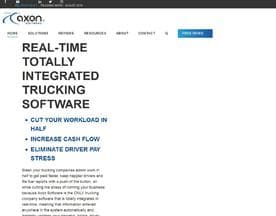
Axon Software is built specifically for trucking companies and puts billing and accounting at the center of its feature set, which matters if your current process involves a lot of manual invoice reconciliation. If your operation is smaller or you're running a mixed-use fleet, Simple Ace offers a more streamlined approach to billing and dispatching without the complexity overhead of a full enterprise suite.
Fleet Maintenance and Asset Tracking
Unplanned downtime is one of the most controllable costs in trucking, but only if you have data early enough to act on it. A good platform will track preventive maintenance schedules, flag vehicles approaching service intervals, and log repair history in a way that's actually searchable.
Platform Science takes a connected vehicle approach, using an open platform to integrate apps and data sources across the cab, which gives fleet managers more visibility into vehicle health alongside driver behavior.
Implementation Is Where Decisions Get Validated
A platform can look excellent in a demo and fail badly in practice. The gap between those two outcomes is almost always an implementation problem, not a product problem. Here is what to probe before you sign anything.
Data migration. If you have years of load history, driver records, or customer data sitting in another system, you need a clear answer on how that data moves over, what format it needs to be in, and who is responsible for cleaning it up. Vague answers here are a warning sign.
Training and onboarding. Dispatchers and drivers have different relationships with software. A dispatcher learning a new system has time to build habits over a few weeks. A driver encountering new in-cab technology at 5 a.m. before a long haul does not. Ask what driver-facing onboarding looks like, not just the back-office training plan.
Support model. Trucking doesn't stop on weekends. Find out what hours support is available, how issues are escalated, and whether your account gets a named contact or goes into a general queue. This matters more than almost any feature.
Watch Out for These Common Mistakes
Buying trucking software is a significant operational decision, and we've seen the same mistakes repeated across all sizes of fleet.
- Over-buying on features. Paying for a platform built for 500 trucks when you're running 30 creates complexity without benefit. Scale appropriately.
- Ignoring integration requirements. If the platform doesn't connect with your accounting system, your load board, or your fuel card provider, someone is doing manual data entry. Map your integrations before shortlisting platforms.
- Treating price as the primary filter. The cheapest platform often generates hidden costs in support time, workarounds, and staff frustration. Total cost of operation matters more than the monthly subscription fee.
- Skipping a pilot period. Most reputable vendors will offer a trial or phased rollout. Use it. Run a real set of loads through the system before committing the whole operation.






Making the Final Call
Once you've narrowed your shortlist to two or three platforms, the decision usually comes down to fit rather than features. Fit means: does this platform reflect how your operation actually works, or does it require you to change your process to match the software?
Some process change is healthy. If your current dispatch workflow is inefficient, a platform that structures it differently might be an improvement. But if adopting a platform means your dispatchers have to fight the system on routine tasks, that friction compounds over months and years.
Talk to other carriers who use the platform. Not the case studies the vendor points you to, but operators you find independently through industry groups or peer networks. Ask them what broke in the first three months, and how the vendor responded. That answer tells you more than any feature list.
The right trucking software doesn't just automate what you're already doing. It gives you the data to make better decisions, the compliance coverage to operate without risk, and the operational clarity to grow without adding proportional overhead. That's the standard worth holding vendors to.


