


Trucking is an operational business. Every minute a truck sits idle, every load that gets misquoted, every driver who waits on paperwork is a direct hit to your margin. The software you run your operation on either tightens that machine or adds friction to it. Choosing the wrong platform is not just an inconvenience; it is a problem you will live with across every dispatch, every invoice, and every compliance filing until you find the will to rip it out and start over.
This guide will help you avoid that situation. We have spent considerable time reviewing trucking solutions software, talking to carriers of all sizes, and watching where evaluations go wrong. Here is what actually matters when you are making this decision.
Know What Problem You Are Actually Solving
Most bad software purchases start with a vague brief. "We need something better than spreadsheets" is not a specification. Before you open a demo, write down the three or four operational failures that cost you the most time or money in the last quarter. Late invoicing? Driver compliance gaps? Inaccurate load costing? Poor visibility into where your trucks are at any given moment?
Your shortlist of vendors should map directly to those failures. A platform with a sophisticated dispatch board will not fix your billing backlog. A driver-focused mobile tool will not help your dispatchers load-plan more efficiently. The software market is wide enough that you can find something built around your specific problem, but only if you know what that problem is before you start looking.
The Core Modules That Matter
Most trucking platforms bundle several functional modules. Understanding what each one does helps you evaluate whether a vendor's implementation is genuinely capable or just checkbox-deep.
Dispatch and Load Management
This is the heart of most trucking operations. You want a system that handles load creation, driver assignment, and real-time status updates without requiring your dispatcher to toggle between five screens. Look for drag-and-drop boards, automatic load matching, and clear visibility into driver availability. If your operation runs dedicated lanes, that logic should be configurable. If you do spot freight, you need fast quoting and flexible assignment.
Driver Management and Compliance
Hours of service (HOS) tracking, electronic logging device (ELD) integration, license and medical certificate expiry alerts: these are not optional extras. They are the minimum. Platforms like DriverReach are built specifically around driver qualification and compliance workflow, which matters if your recruiting and onboarding process is a pain point alongside operations. Think about where your compliance burden is heaviest and whether a general-purpose platform handles it well enough or whether a specialist module earns its place.
Billing, Invoicing, and Settlements
Revenue leakage in trucking often lives in the billing cycle. Slow invoicing, missed accessorial charges, and manual rate calculations add up. Look for rate table management, automated invoice generation tied to proof of delivery, and driver pay settlement that handles percentage-of-revenue, mileage, and flat-rate structures without requiring manual reconciliation every week.
Fleet Maintenance
Maintenance scheduling and repair tracking are underrated in most evaluations. You may not think of this as a software problem until a truck goes out of compliance or an unexpected breakdown reveals that your maintenance history was scattered across email and paper forms. A system that tracks preventive maintenance schedules and flags upcoming service intervals saves you more than it costs.
Deployment Model and Integration Reality
Cloud-based platforms dominate the current market, and for most carriers that is the right default. Lower upfront cost, automatic updates, and access from any device matter when your operation spans multiple terminals or when your dispatchers occasionally work remotely. That said, some operators in areas with unreliable connectivity or with strict data governance requirements still prefer on-premise or hybrid models.
Integration matters more than most vendors want to admit during a demo. Your trucking platform needs to talk to your accounting system, your ELD provider, and potentially load boards or customer TMS (transportation management system) portals. Ask every vendor specifically how those integrations work, whether they are native, API-based, or handled through a third-party connector, and who is responsible when data does not sync correctly.
Platform Science takes an interesting approach here, positioning itself as a connected vehicle platform rather than a standalone TMS, which reflects a broader trend toward treating the truck itself as a data endpoint. That framing is worth understanding as you think about where your operation is headed technically, even if your immediate need is simpler.
Evaluating Vendors Beyond the Demo
A polished demo environment is not your operation. Push vendors to show you edge cases: what happens when a driver goes out of hours mid-route, how a disputed invoice gets handled, how you roll back an error in a settlement run. The answers will tell you more than a feature checklist.
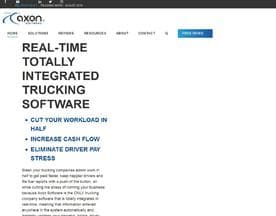
Reference checks are non-negotiable. Ask specifically to speak with carriers of similar size and freight type, not the vendor's showpiece enterprise client. Smaller carriers evaluating platforms like Axon Software or BeyondTrucks will have different questions and different experiences than a large fleet operation, and you want to hear from someone whose operational reality resembles yours.
Pay attention to the implementation process. Software that takes six months to stand up and requires a consultant on-site carries a real cost beyond the license fee. Ask how long a typical deployment takes, who manages data migration, and what training looks like for dispatchers and drivers who have never used the system before.
Pricing Models and the Total Cost of Ownership
Per-truck, per-user, and flat-rate monthly models are all common in this category. Per-truck pricing scales predictably as your fleet grows but can become expensive if you run a large fleet with a lean back-office team. Per-user pricing favors operations where the software is concentrated in the hands of a small dispatch and admin team. Flat-rate models reward growth but may bundle features you do not need.
Build your cost model around three years, not one. Include implementation, training, any integration work, and the internal time your team will spend during the transition. A cheaper license fee with a rough implementation often ends up more expensive than a slightly pricier platform that gets you operational in weeks rather than months.






Making the Final Call
You will not find a perfect platform. Every system makes trade-offs, and the right one for your business is the one whose trade-offs least affect the work you actually do most. Narrow your shortlist to two or three options, run a structured pilot on real data if the vendor allows it, and involve the people who will use it daily, including drivers, dispatchers, and whoever handles billing.
The goal is not to buy the most capable software on the market. It is to buy the software your team will actually use, that solves the problems costing you the most, and that can grow with you without requiring a replacement decision in two years. Start with the problem, stay disciplined about the requirements, and the right choice becomes considerably more obvious.


