


Running a nursery means holding two very different worlds in your head at the same time. There is the operational side: plant inventory, orders, pricing, logistics, and supplier relationships. And there is, depending on your business model, the care or retail side: staff schedules, customer accounts, compliance records, and billing. Most nursery operators manage these worlds through a patchwork of spreadsheets, paper forms, and tools never designed for the job. Nursery software exists to collapse that patchwork into something coherent. The question is whether the platform you choose actually fits your operation, or just adds a new layer of complexity on top of the old one.
The Word "Nursery" Covers a Lot of Ground
Before you evaluate a single product, be precise about what kind of nursery you are running. The market splits into two distinct categories that share a name but have almost nothing else in common.
Plant nurseries grow, source, and sell trees, shrubs, bedding plants, and similar stock. Their software priorities are inventory management (often tracking plants at the individual tag level), lot-based pricing, seasonal availability, purchase orders, and delivery routing.
Childcare nurseries (early years settings, daycare centers, preschools) manage children's attendance, staff-to-child ratios, developmental assessments, billing, and regulatory compliance. The software priorities here are almost the inverse of the plant side.
Some vendors serve both markets by coincidence of naming. Others have built deeply for one and only one. Sending yourself down the wrong path wastes weeks. Start every evaluation by confirming, in plain language, which industry the vendor actually serves.
Core Features for Plant-Side Operations
If you run a grower, wholesale, or retail plant nursery, the capabilities that matter most cluster around stock and sales.
Inventory at the tag and lot level
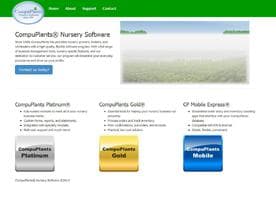
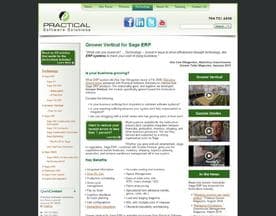
Plants are living, perishable, seasonally variable inventory. A system that treats them like widgets on a shelf will frustrate you quickly. Look for software that tracks individual specimens or lots, links availability to location within the nursery (bench, house, field), and flags stock that is aging past peak salability. Grower Vertical and CompuPlants have both built specifically around grower and wholesale nursery workflows, which means this kind of granularity tends to be native rather than bolted on.
Pricing and catalog management
Nursery pricing is complicated. Retail, wholesale, and contract pricing often coexist. Prices shift with plant size, season, and customer tier. A system with rigid, single-tier pricing will require manual workarounds within months. You want flexible price lists, the ability to tie pricing to container size or grade, and ideally some automation for rolling seasonal adjustments.
Order and delivery management
Batch orders, split deliveries, route-optimized scheduling: these are table stakes for any nursery moving meaningful volume. If the software cannot link a purchase order to a delivery manifest to a customer invoice without re-entering data at each step, you will pay for that gap in staff time every single week.
Core Features for Childcare Settings
Childcare nurseries operate under a different set of pressures. Regulatory compliance is non-negotiable. Billing is often complex (government-funded hours, subsidies, invoicing across multiple rate types). And staff-to-child ratios have to be visible in near-real-time. Procare Solutions and Smartcare are two of the better-known names in this space, and platforms like Kinderlime and Nursery Story have also built around these core requirements.
Attendance and ratio tracking
Paper sign-in sheets create compliance risk. Any serious platform should support digital check-in, typically via tablet or app, with automatic ratio monitoring and alerts when a room is approaching its licensed limit. This is one of those features where the difference between basic and good is significant. Basic tells you what happened. Good alerts you before a problem occurs.
Billing and subsidy management
Government funding schemes (vouchers, subsidy programs, funded hours) vary by jurisdiction, but they consistently create billing complexity. A platform that handles subsidy deductions automatically, generates parent invoices with the correct net amounts, and produces reports for funding claims will save your admin team substantial time each period.
Developmental records and parent communication
Regulatory inspections increasingly expect documented evidence of children's learning journeys. Software that integrates observation records, developmental milestones, and parent communication in one place reduces the double-handling that drains staff time. Parents also now expect real-time updates on their child's day, and platforms that support photo sharing and messaging within a secure environment raise both satisfaction and trust.
Questions to Ask Every Vendor
Regardless of which type of nursery you run, these questions will quickly reveal whether a vendor is worth your time.
- Implementation support. What does onboarding actually look like? Who handles data migration from your current system? Is there a dedicated point of contact or a ticket queue?
- Integration depth. Does the platform connect to your accounting system natively, or through a workaround? Plantista is one platform that emphasizes integration as part of its value proposition. Confirm what "integration" means in practice: real-time data sync or a periodic export?
- Mobile access. Staff in a childcare setting or a production greenhouse need access away from a desk. Test the mobile experience before you buy, not after.
- Reporting and compliance output. Ask for a sample of the reports the system generates for regulatory or financial purposes. If the vendor cannot produce a clear example quickly, that is informative.
What to Watch Out For
The biggest trap in nursery software buying is purchasing on feature lists rather than workflows. A vendor can demonstrate every capability you asked for while those capabilities sit in separate modules that do not communicate cleanly. Ask specifically how data flows between inventory, ordering, billing, and reporting. Follow a single transaction from creation to completion during the demo. The friction you feel in that walkthrough is the friction your team will feel every day.
Pricing models also deserve scrutiny. Per-user pricing makes sense for large teams with occasional users but can become punishing as you grow. Flat-rate or site-license models are often better for operations where most staff need daily access. Get the pricing in writing, including what triggers a tier change, before you sign anything.




Making the Decision
The best platform is the one your team will actually use consistently. That means it needs to fit the way your operation already works at its best, not the way a vendor's demo scenario works. Shortlist two or three options that match your nursery type, test them against a real slice of your data and workflows, and involve the staff who will use it daily in the evaluation. Their friction points will surface problems that a management-level review will miss entirely.
Nursery software done right does not just digitize what you already do. It reveals patterns in your inventory, your billing, and your operations that were previously invisible. That visibility is where the real return lives.


